Story published on August 16, 2026
Several leaders of the Ohio Veterinary Medical Association are tied to practices that perform elective declawing. The association claims a ban would “take medical decisions away from veterinarians”—yet its own president-elect’s clinic says the procedure is “not medically necessary.”
(CityTheKitty.org) — On September 3, 2025, Ohio Senators Al Cutrona (R-Canfield) and Hearcel Craig (D-Columbus) introduced Senate Bill 252, which would ban elective declawing while allowing an exemption when the procedure is medically necessary for the cat’s health, such as for a tumor, injury, or infection.
The Ohio Veterinary Medical Association (OVMA) opposes SB 252 stating: “A ban would take medical decisions away from veterinarians,”
Their statement appeared in the OVMA’s account of its April 2026 Legislative Day, when association members met with elected officials and legislative aides to discuss the bill.
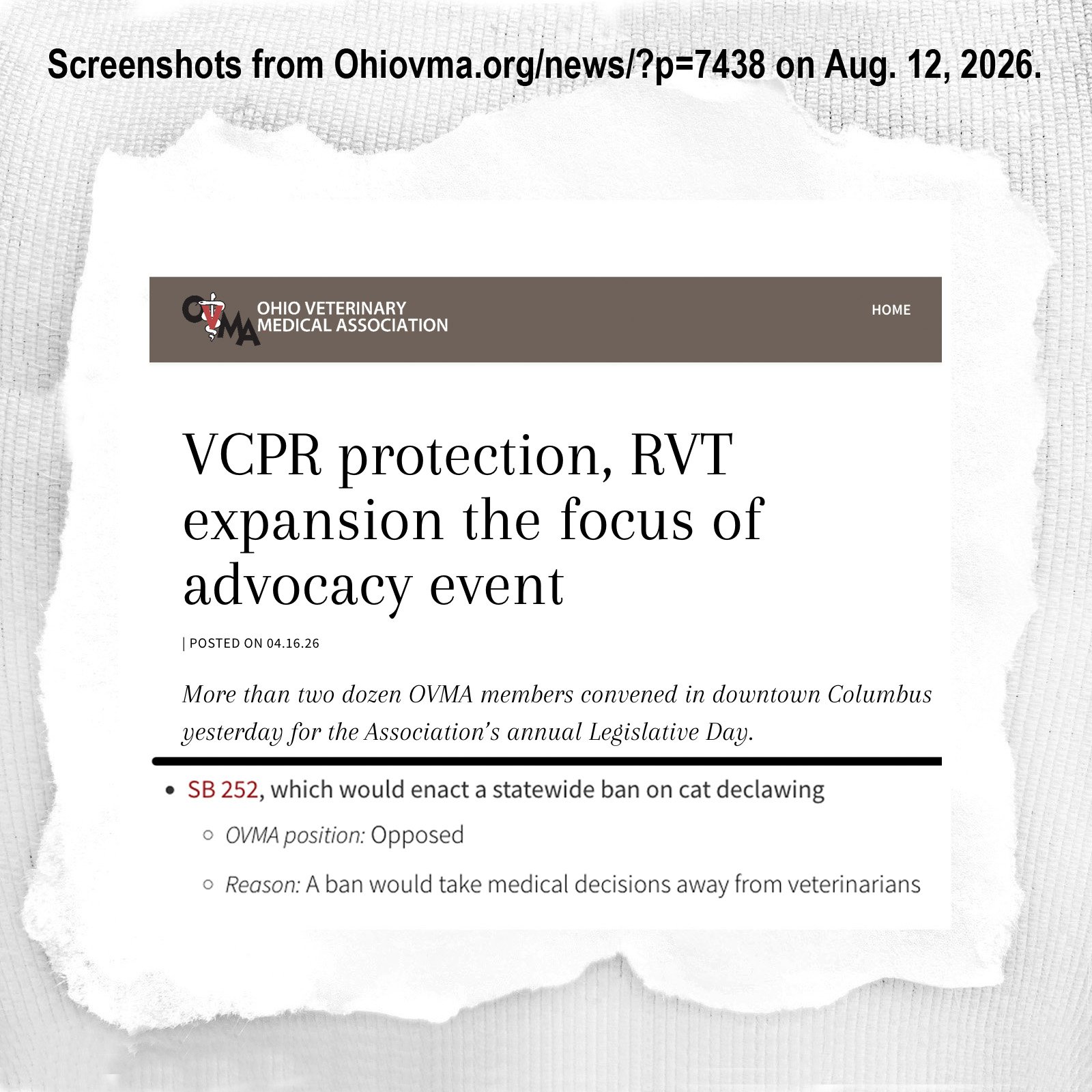
Link to the OVMA’s website. https://www.ohiovma.org/news/?p=7438
Yet the OVMA’s president-elect owns a veterinary clinic in Ohio that publicly states on her website that elective declawing “is not medically necessary” and they do not perform it.
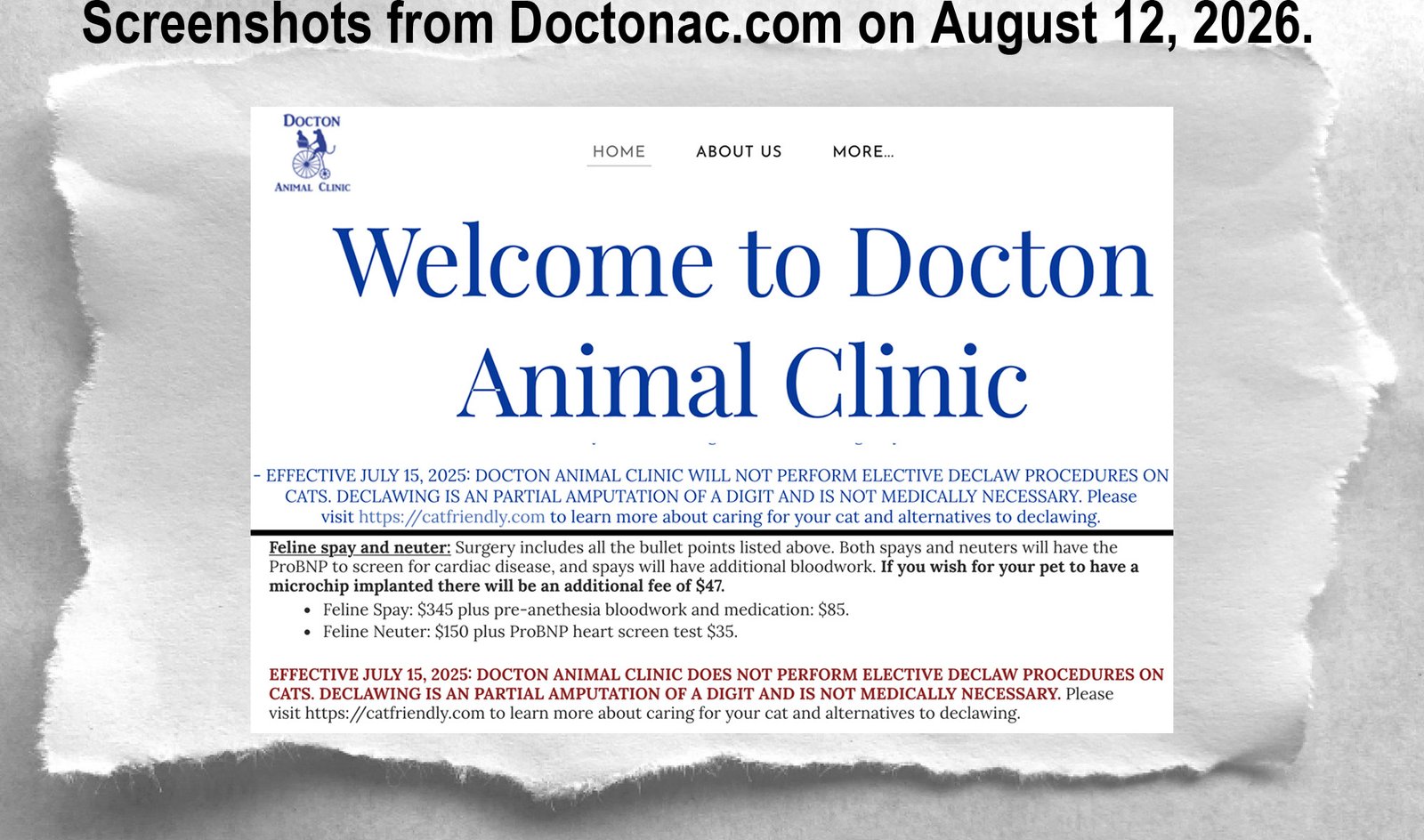
Link to Docton Animal Clinic’s page. http://www.doctonac.com/surgery.html
Here’s the question that we asked the OVMA. If elective declawing is not medically necessary, what medical decision would veterinarians lose under a bill that would still allow declawing when medically necessary to treat a cat’s injury, tumor or other medical condition?
OVMA Opposed the Declaw Ban at the Statehouse
OVMA position: Opposed.
Reason: “A ban would take medical decisions away from veterinarians.”
The President-Elect’s Clinic Takes the Opposite View
Dr. Tina Stonecypher, the OVMA’s president-elect, owns Docton Animal Clinic in Xenia, Ohio.
On July 15, 2025, the clinic announced it had stopped performing elective declawing:
“DOCTON ANIMAL CLINIC DOES NOT PERFORM ELECTIVE DECLAW PROCEDURES ON CATS. DECLAWING IS A PARTIAL AMPUTATION OF A DIGIT AND IS NOT MEDICALLY NECESSARY.”
The clinic directs owners to resources on the humane alternatives.
Dr Stonecypher’s clinic says elective declawing is not medically necessary, while the OVMA opposes a bill banning it, saying the ban would take medical decisions away from veterinarians.
But SB 252 would still allow declawing when medically necessary to treat a cat’s injury, tumor or other medical condition.
OVMA has not identified what medical decision veterinarians would actually lose and hasn’t responded to City the Kitty’s email asking these questions.
Declawing Clinics on the OVMA Board Raise a Governance Question
OVMA says its 20-member Board of Directors “guides Association policies and resources” and “considers current legislation,” while its Legislative Committee “makes recommendations regarding public policy positions.”
CityTheKitty.org found several board members are affiliated with clinics that perform elective declawing, including clinics tied to the association’s president, 2025 Legislative Committee chair and current secretary, and a past president.
The contrast is striking: OVMA’s president-elect’s vet clinic that says elective declawing “is not medically necessary” and does not perform it, while other board-affiliated clinics continue to offer it. Are board members whose clinics perform declawing helping shape OVMA’s opposition to SB 252—and what medical decision would the bill actually take away?
Dr. Mike Dyer, the 2025 Legislative Committee chair and current secretary, is the only veterinarian at his clinic who performs declaws according to the clinic and they have 6 vets listed on their website. His clinic acknowledges that studies show declawing can cause “long-term issues such as arthritis and behavioral changes” and calls it the “medical equivalent of amputating down to the first knuckle.”
The Feline Veterinary Medical Association says declawing “is NOT a medically necessary procedure for cats in most instances,” (unless it’s for a tumor, injury, or infection) while International Cat Care (iCatCare), a globally recognized authority dedicated exclusively to cat health and welfare, calls declawing for anything other than genuine therapeutic medical reasons “an act of mutilation” and “unethical.”
Yet OVMA opposes SB 252, saying a ban would “take medical decisions away from veterinarians,” even though the bill would still allow declawing when medically necessary for a cat’s injury, tumor or other medical condition.
That raises a direct governance question: Do board members whose clinics perform declawing participate in developing, voting on or approving the association’s legislative positions on the procedure?
CityTheKitty.org asked the OVMA whether its Board of Directors votes on positions such as opposition to SB 252 and whether members affiliated with declawing practices took part in that decision and has not received a reply.
The question echoes findings in CityTheKitty.org’s earlier investigation of the American Veterinary Medical Association (AVMA), where delegates shaping the AVMA’s declawing policy were affiliated with practices that perform declawing.
A Majority of Surveyed Ohio Clinics Still Declaw
CityTheKitty.org’s surveys of Ohio veterinary clinics in 2022 and 2025 found that a majority of clinics surveyed continued to perform elective cat declawing. Many of the veterinarians who perform the procedure are OVMA members.
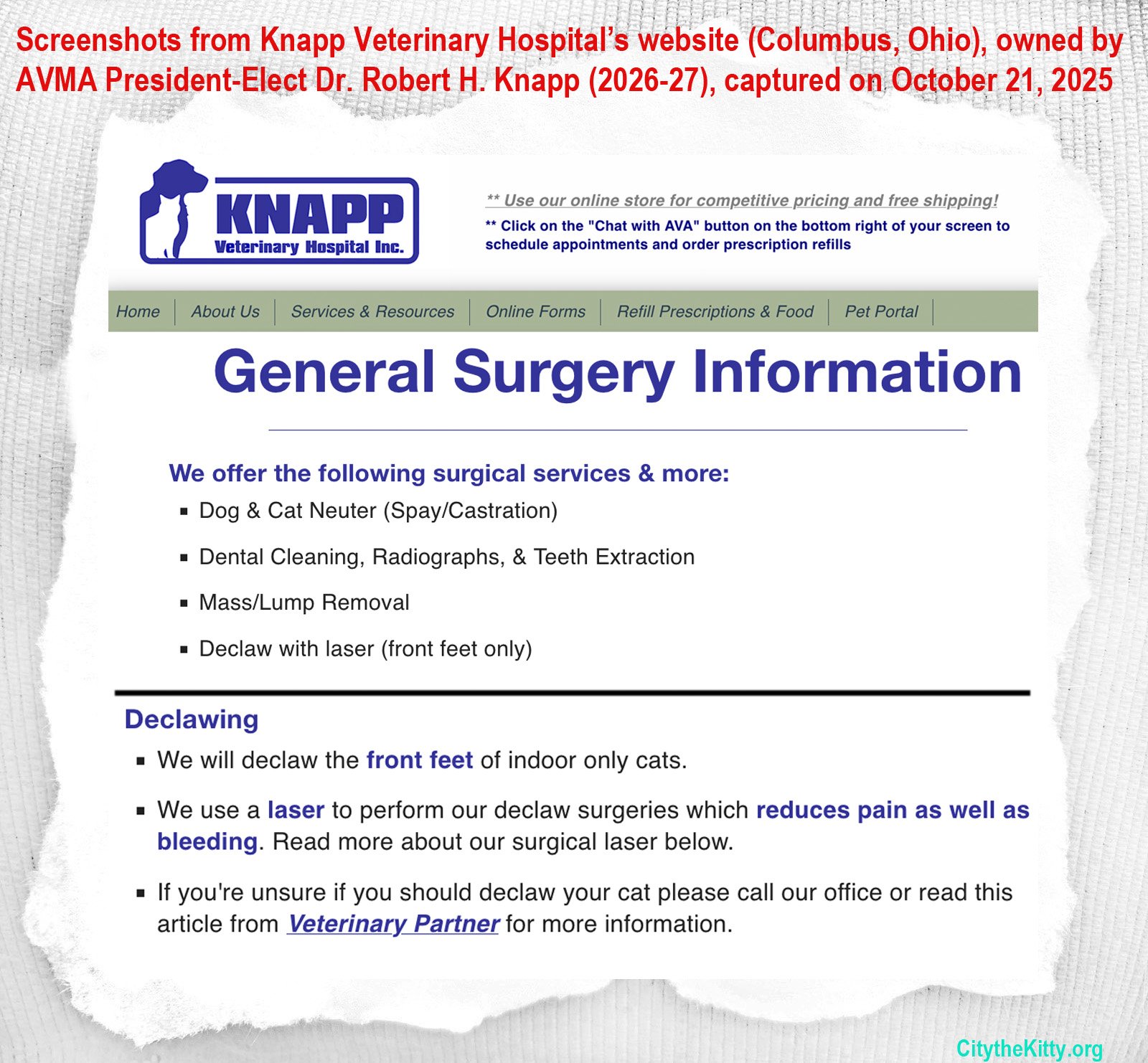
They include Dr. Robert Knapp, a former OVMA president whose clinic, Knapp Veterinary Hospital, even advertised their declawing services up until City the Kitty’s story was published in October 2026.
Dr Knapp is now the AVMA’s president-elect.
State veterinary medical associations represent the professional interests of their members. When a substantial share of those members, and members of the association’s own leadership, continue to perform declawing, this question arises: Are veterinary medical associations like OVMA putting the professional and financial interests of their member veterinarians ahead of animal welfare?
The Irony: OVMA’s Animal Abuse Guidelines Describe Harms Linked to Declawing
The irony runs deep.
The OVMA has an Animal Abuse Recognition & Reporting Task Force that teaches veterinarians to recognize possible animal cruelty.
Its own “Red Flags of Animal Abuse” handbook tells veterinarians to watch for “refusal of pain medication and/or basic care,” “chronic, untreated medical problems,” and “chronic lameness.”
OVMA also provides animal abuse resources and directs veterinarians to outside organizations including the ASPCA, AVMA, HSUS and National Link Coalition.
Yet OVMA opposes a bill to end elective declawing—a procedure that amputates cats’ toe bones and has been linked to chronic pain, lameness and behavioral problems.
International Cat Care, (ICatCare) is a globally recognized authority dedicated exclusively to improving the health and welfare of cats, with its veterinary division providing worldwide resources on feline medicine and surgery. iCatCare states that declawing for anything other than genuine therapeutic medical reasons is “an act of mutilation” and “unethical.”
National Veterinary Associates National Veterinary Associates (NVA), one of the biggest veterinary group companies in America calls elective declawing “inhumane” and banned it on Feb. 1, 2026.
OVMA does not call declawing animal abuse, but why does an association that teaches veterinarians to recognize cruelty ignore the striking overlap between its own abuse warning signs and the documented pain, harm, mutilation and inhumane nature of elective declawing?
OVMA’s Position Shifted From Review to Opposition
In 2020, the OVMA said in an email to City the Kitty nonprofit it “does not typically make general policy statements on medical and/or behavior procedures and considerations” and generally referred to the AVMA’s declawing position.
An NBC4 story about the bill in September 2025 said this: “NBC4 reached out to the Ohio Veterinary Medical Association to inquire about its position on the bill; the organization said it is reviewing the legislation and will work with the sponsors once it has completed its “due diligence” on the matter. ”
By April 2026, it had moved from review to active opposition at the Statehouse.
The OVMA has not publicly stated what that due diligence determined or whether it consulted the AVMA in forming its position.
Declawing Can Also Cause Moral Distress for Veterinary Professionals and Staff
Declawing doesn’t just harm cats for life. Elective declawing can be a significant source of burnout, stress and moral distress for veterinary professionals and staff who are expected to perform, assist with or witness a procedure they believe is unethical, inhumane and harmful to cats.
City the Kitty asked this question to the OVMA in an Aug. 5 email but received no response.“Declawing harms not only cats but also veterinary professionals who experience moral distress from participating in or witnessing this brutal procedure they know is inhumane and unnecessary. Does the OVMA stand with those veterinary professionals and care about protecting them, or is protecting the interests and profits of members who continue to perform declawing the higher priority?”
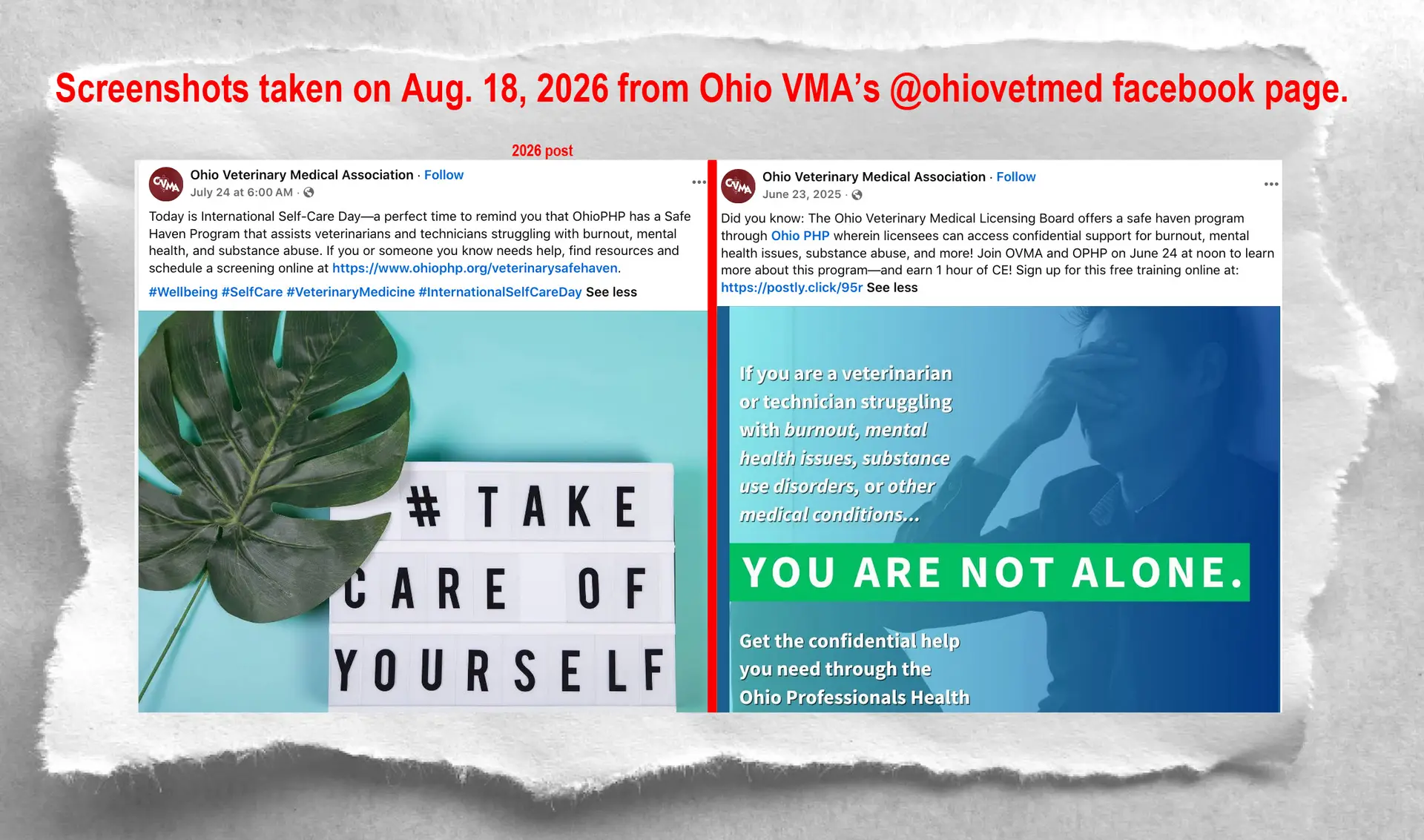
The issue is particularly striking given the OVMA’s own promotion of the Ohio Veterinary Medical Licensing Board’s Safe Haven Program through OhioPHP, which provides confidential support for veterinary professionals experiencing burnout, stress and mental health concerns. In a July Facebook post, the OVMA encouraged veterinary professionals to learn about the program, which is intended to support their health and well-being.
City the Kitty contacted both the Ohio Veterinary Medical Licensing Board and OhioPHP on August 18, 2026, asking whether the OVMA’s effort to keep elective declawing legal conflicts with the Safe Haven Program’s mission. City the Kitty also asked whether they recognize declawing as a potential source of moral distress and whether the OVMA is putting the interests of veterinarians who perform declawing ahead of the welfare of cats and the well-being of veterinary professionals and staff who experience harm from declawing.
We will post an update with their answers if we get them.
CityTheKitty.org Asked The OVMA and Dr Stonecypher for Answers
CityTheKitty.org contacted the OVMA and Dr. Stonecypher with detailed questions before publication of this story.
As of publication, neither the OVMA nor Dr Stonecypher have responded.
The Question for Ohio Lawmakers
Since SB252 has already had its required one public hearing, it is up to the chair of the Senate Agricultural and Natural Resources Committee to give SB252 additional hearings.
Sen. Tim Schaffer, is the chair of the Senate Agriculture and Natural Resources Committee, and he now holds the fate of SB 252 in his hands.
City the Kitty reached out to Senator Schaffer in November 2025, sharing our reporting on how declawing remains common in Ohio and how the procedure can cause moral distress for veterinary professionals and received no reply. We contacted him again in July 2026 to ask whether he would give the bill another hearing. His legislative aide responded: “I know Senator Schaffer is reviewing this legislation but am not sure of the future plans for the committee in the fall. I have passed along both messages here to Chair Schaffer and if provided with any feedback will follow up with you.”
SB 252 would not take away veterinarians’ authority to declaw a cat when it is medically necessary to treat an injury, tumor or other medical condition. It would only prohibit elective declawing of healthy cats for non-therapeutic reasons.
One senator now holds the power to help make Ohio the seventh state in the nation to ban this animal cruelty and protect thousands of healthy, innocent cats from an inhumane amputation procedure that permanently mutilates their paws.
Senator Schaffer has a choice: stand with Ohio’s cats, help end elective declawing, and go down in history as a humane legislator who stood up for the welfare of all animals—or protect the interests and profits of veterinary clinics and veterinarians that continue to perform it.
Senator Schaffer’s can be contacted at – Schaffer@ohiosenate.gov .
Here’s our small survey of some of the OVMA board member’s clinics.
Survey Methodology
One of our researchers conducted a brief phone call with each clinic. The researcher asked the cost of a neuter/declaw, who at the clinic performs declawing, and whether cats are okay long-term after the procedure.
We have withheld the names of employees for fear that they might suffer a backlash for their honest answers.
Dr. Amanda Wagner. OVMA President (2026–present)
Part-owner, Tri-County Veterinary Service, Anna, OH
The researcher asked for the cost of a neuter and declaw and the employee asked, “Are you wanting to do the declaw with the neuter?” The employee said usually a lot of people will do them at the same time because it’s a little bit cheaper.
The employee said that a declaw starts at $285 and a neuter starts at $135. The employee said the clinic only declaws the front feet. When asked why, the employee explained that if the cat ever escaped, it would still need its claws to defend itself.
The employee said that they have 3 doctors, Dr Wagner, Dr Mack, and Dr Headings who will do a declaw but Dr Giesige doesn’t like doing declaws so she doesn’t do them.
Researcher asked if they perform declaws regularly and the employee said yes.
Researcher asked if the cats are ok long term after a declaw and the employee said yes.
The employee was asked if they use a laser and if it’s better and the employee said yes, and said it cauterizes the tissue as it cuts through so there’s less bleeding, less swelling, and less risk of infection and cats are hard to keep calm after surgery so the laser is a better option than a traditional scalpel. (There is no real data that shows that a laser is better than a scalpel for a cat after a declaw. #8 in our Facts vs Myths section.)
Dr. Tina Stonecypher, the OVMA’s president-elect.
Part owner of Docton Animal Clinic in Xenia, OH
The employee said that they do not do declaws. Researcher asked why and the employee said, “It’s not medically recommended.”
Researcher asked if they do declaws for people with thin skin or on blood thinners and the employee said no, it’s not recommended for the cat.
They mentioned scratching boards and regular nail trims instead. Researcher asked if a declaw is bad for a cat and the employee said yes, it’s like removing their knuckles.
The employee said there is a vet in Fayette that still offers declaws.
Dr Mike Dyer. 2025 Chair of the Legislative Committee and 2026 Secretary
Owner of Proctorville Animal Clinic, Proctorville, OH
This clinic has two Cat Friendly Practice logos on their website. The Feline VMA banned declawing in their Cat Friendly Practices in 2020 and this clinic is not listed as a Cat Friendly Practice on the Feline VMA’s website.
They only have one veterinarian, Dr Hannah Finney, listed as a Cat Friendly Veterinarian on the Feline VMA’s site.
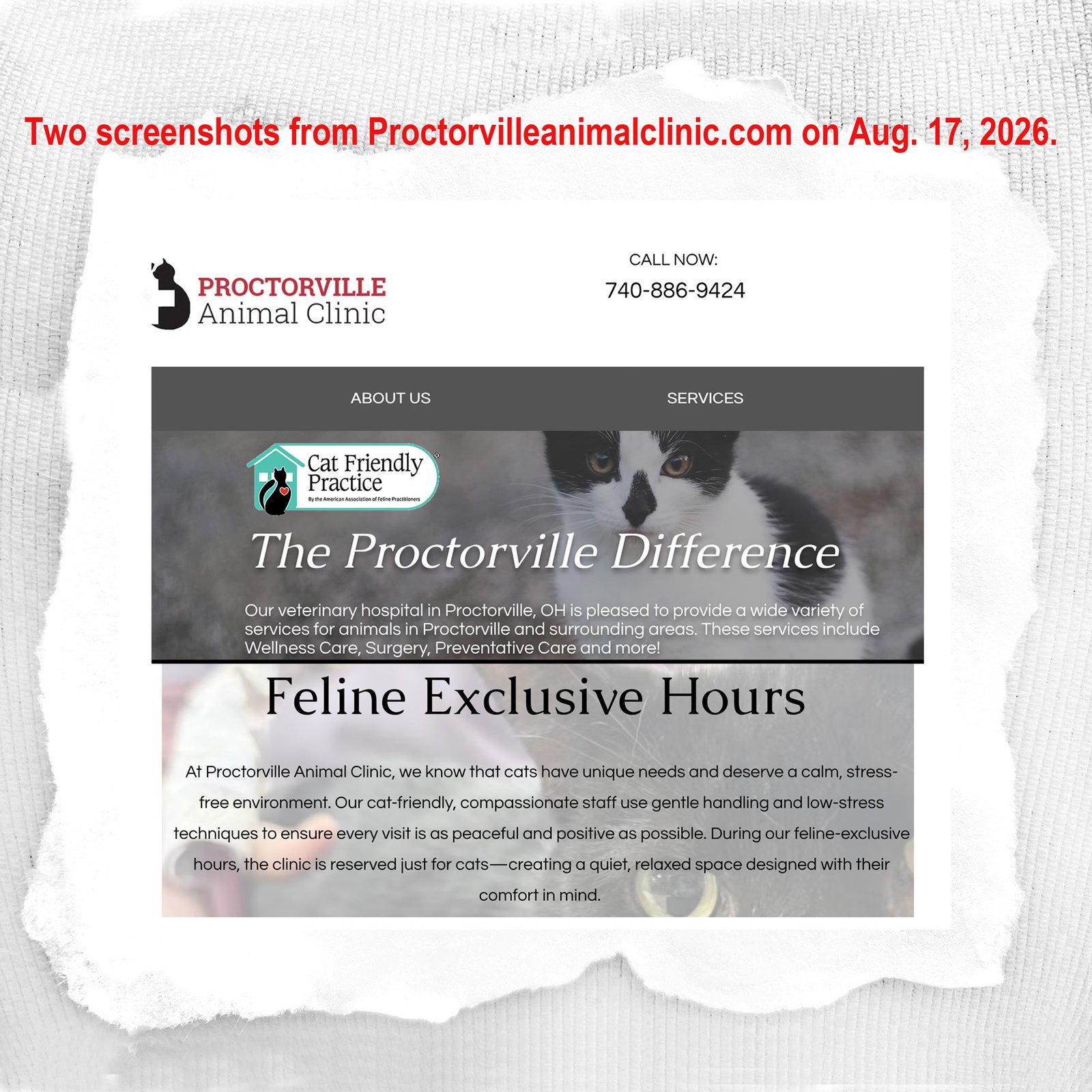
Link- https://www.proctorvilleanimalclinic.com/
City the Kitty emailed this clinic, proctorvilleanimalclinic@gmail.com, on August 13, 2026 and asked, “Hi, Do you provide declawing services?”
The clinic responded, “We have 1 doctor that performs declaws. We do have to see your pet in for a consultation first before scheduling surgery.
Dr. Gail Counts. District Rep.
Shawnee Animal Clinic (Portsmouth, OH)
The employee said that Dr Counts is retired. She is still listed as the owner on their website. https://sacpets.com/our-practice/meet-the-team
She also is the founder of Sierra’s Haven nonprofit. They’ve done many posts on their facebook page about declawed cats in need of a new home.
The employee said that a neuter is $131 and declaw is $447. The employee said that they have multiple, 8 or 9, doctors that can do the declaw. They have 9 vets listed on their website.
Researcher asked if they use laser for the declaw and the employee said yes, they will perform laser therapy on the incision spots to help them heal.
Researcher asked if they perform declaws regularly and the employee said, “Yea, we do those every day.”
Researcher wanted to confirm and asked, “The declaws?” and the employee said yes.
Researcher asked if the cats are ok long term after a declaw and the employee said yes.
Dr. Sue Savage. District Rep.
Reynolds Road Animal Hospital . Toledo, OH
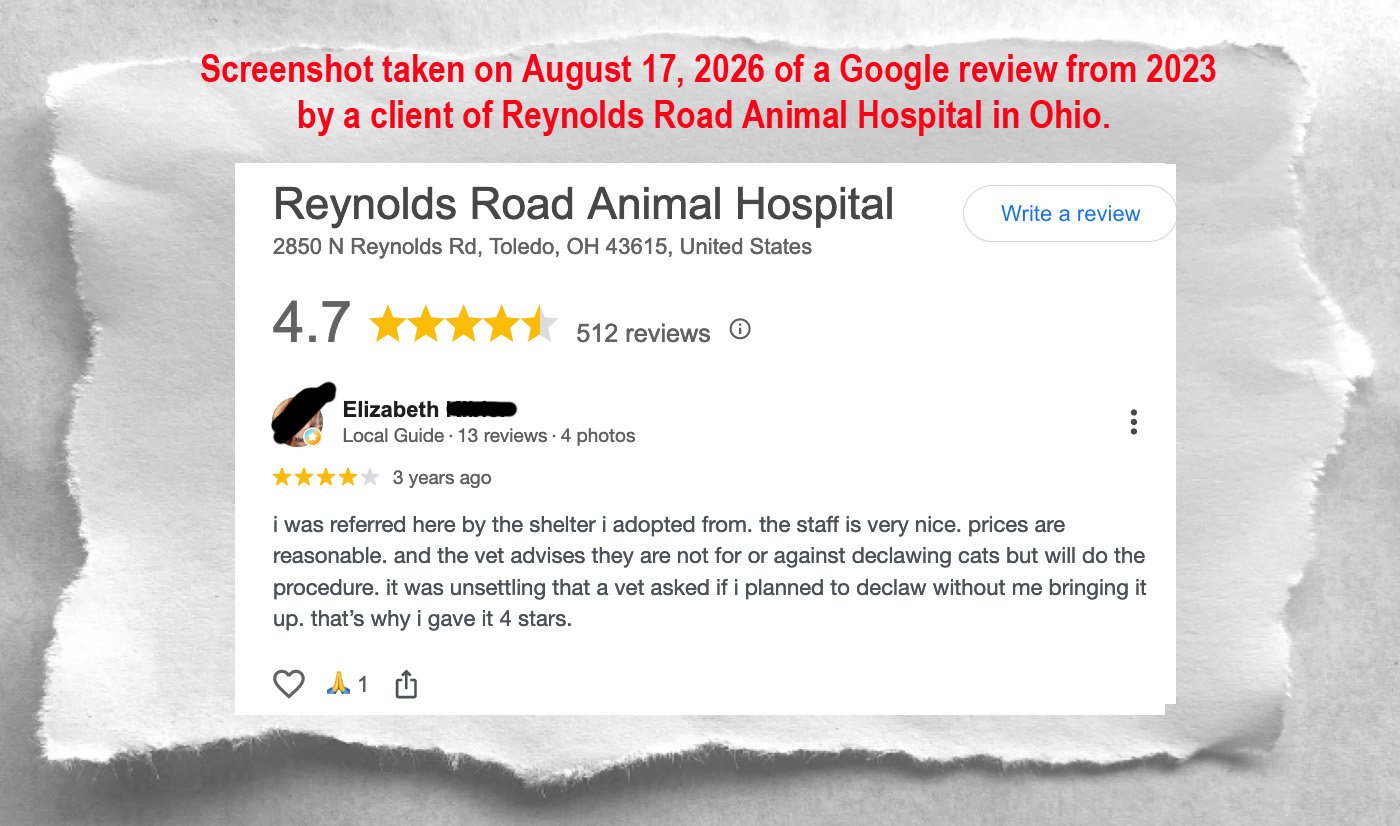
According to this review, one of the vets at this hospital asked this cat owner if she planned to declaw her new cat. Link to their google review page.
The employee said that the doctors would have to give the cost for the declaw and an exam starts at $60. The employee said that they have a couple doctors who will do a declaw, Dr Savage and Dr Grothaus. https://rrahvet.com/veterinarian-toledo-oh/
Researcher asked if they use a laser for the declaw and the employee said they do not use a laser and said they “cut them off and then they stitch them and glue them.” They said usually there’s an age limit and it’s up to the doctor’s preference.
Researcher asked if they perform declaws regularly and the employee said, “yea, they’ve done some.”
Researcher asked if the cats are ok long term after a declaw and the employee said yes if it’s done at an early age.
Dr. Diana Dornbusch Cron. Past President of the OVMA (2024).
Glenway Animal Hospital. Cincinnati, OH
https://www.glenwayanimalhospital.com/our-practice/meet-the-team
This information is from our November 2025 story. This hospital is #43 in the story.
https://www.glenwayanimalhospital.com
This is an AAHA Accredited Animal Hospital and AAHA.org still allows declawing in their hospitals even though they say they strongly oppose it.
Researcher asked for the cost of a neuter/declaw for a 5 month old cat. The employee said that they perform declaws on a case by case basis, a neuter/declaw is probably over $1000, and their declawing vet is Dr Brian Cron.
The employee said it’s up to the doctor if they will do the declaw. The researcher asked when is it ok to do a declaw and the employee said “we basically kind of discourage a declaw” and said Dr Cron wants to go over all the possible side effects of the surgery because a declaw is basically cutting off the part of their fingers and said there can be lasting complications sometimes. They said he wants you to be fully informed before the declaw.
Researcher asked if once you are informed do they go ahead with it and the employee said, “Probably, because he is 5 months old, so he’s young enough.”
Researcher asked if he performs declaws regularly and the employee said, “We don’t do them really really often, but he does do them.”
They said they will not perform a 4 paw declaw.
Dr. Michele Awad Morris. District Rep.
Orrville Veterinary Clinic. This is a Veterinary Wellness Partners clinic. (Orrville, OH)
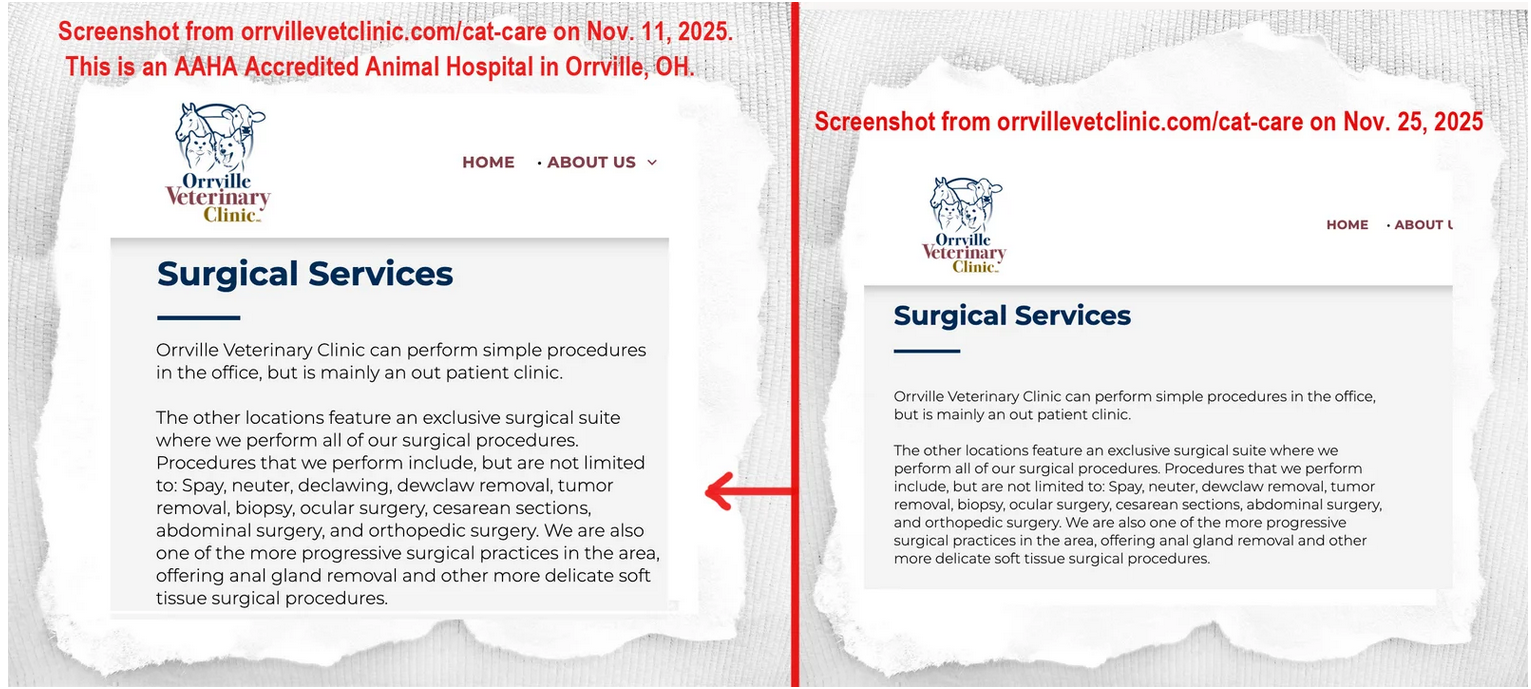
The “declawing” word was removed from their website after we published our Nov. 2025 story.
According to a March 29, 2011 facebook post by Orrville Veterinary Clinic, they received their accreditation to be an AAHA accredited animal hospital.
This clinic made a facebook post about it and said, “Orrville Veterinary Clinic belongs to a select group of practices that are committed to meeting the standard of veterinary excellence,” says Gregg Takashima, DVM, AAHA president. “AAHA hospitals pass a stringent evaluation of over 900 standards covering patient care, client service and medical protocols. By attaining accreditation, Orrville Veterinary Clinic is demonstrating its dedication to offering the best care to its patients and clients.”
This clinic has the Fear Free Pets logo on their website however they are not listed on FearFreePets.org’s website as being a Fear Free Clinic or having Fear Free professionals. Fear Free banned declawing in their clinics in 2021.
Information from our November 2025 survey. This clinic is #36 in our story.
Researcher asked an employee at Orrville Veterinary Clinic for the cost of a neuter/declaw and the employee asked, “Are you wanting a two paw or four paw declaw?”
A neuter/2 paw declaw is $520 and a 4 paw declaw/neuter is $630 and they said Dr Fink and Dr Hofstetter perform their declaws and said both are great but recommended Dr Fink for the declaw as they said he is at their clinic more consistently.
They said they use an electro-cautery for the declaws said, “it encourages quicker healing.”
Researcher asked if the cats are ok long term after a declaw and the employee said yes and said that they keep their cats there two nights to “monitor and make sure they are not losing too much blood” and to make sure everything is healing ok.
Researcher asked if after a couple nights the cats are ok long term after the declaw and the employee said yes.
Researcher asked if they perform declaws regularly and the employee said, “Yes, we do.”