
Nearly 75 Years After The AVMA Helped Popularize Declawing, Two Vets Connected to Declawing Clinics Rise to AVMA’s Top Leadership
On July 11, 2026, at the AVMA convention in Anaheim, CA. the AVMA House of Delegates (HOD) unanimously elected Dr. Robert Knapp as its 2026-27 president-elect and Dr. Elizabeth Boggier as its vice president.
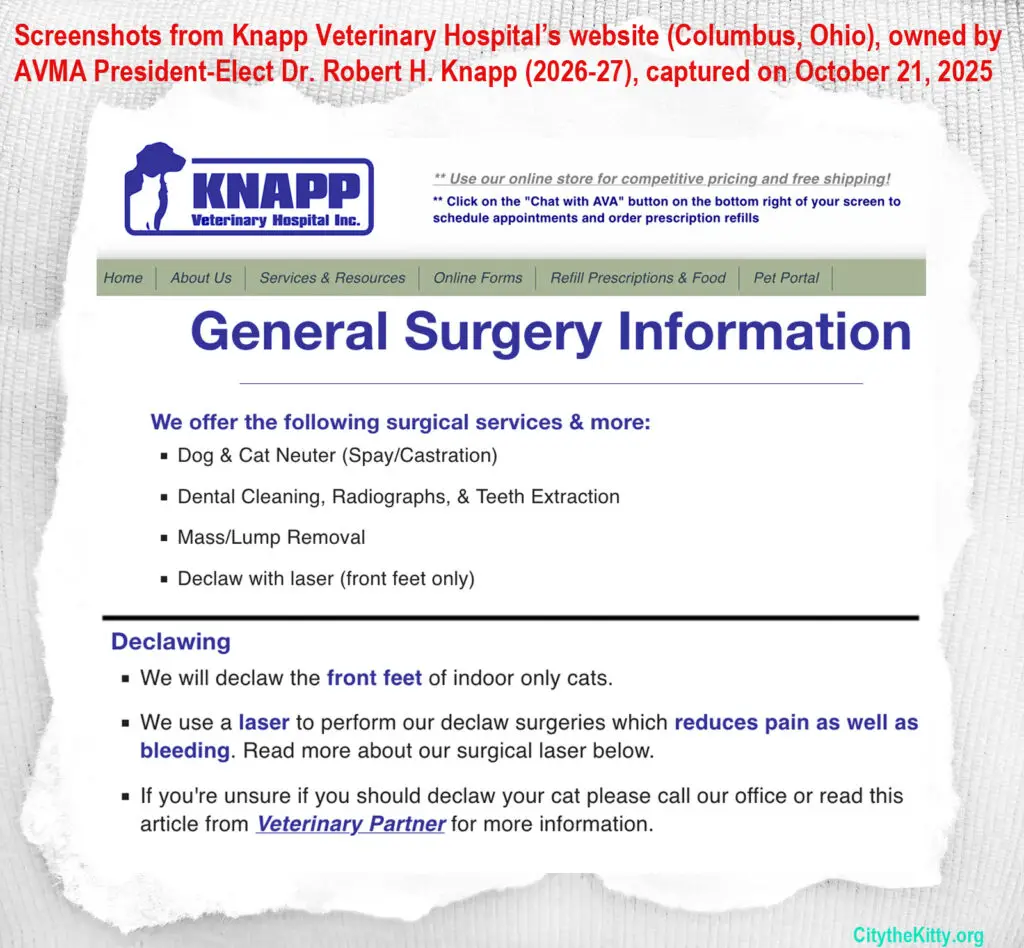
“Yes, they do them all the time, yes.”
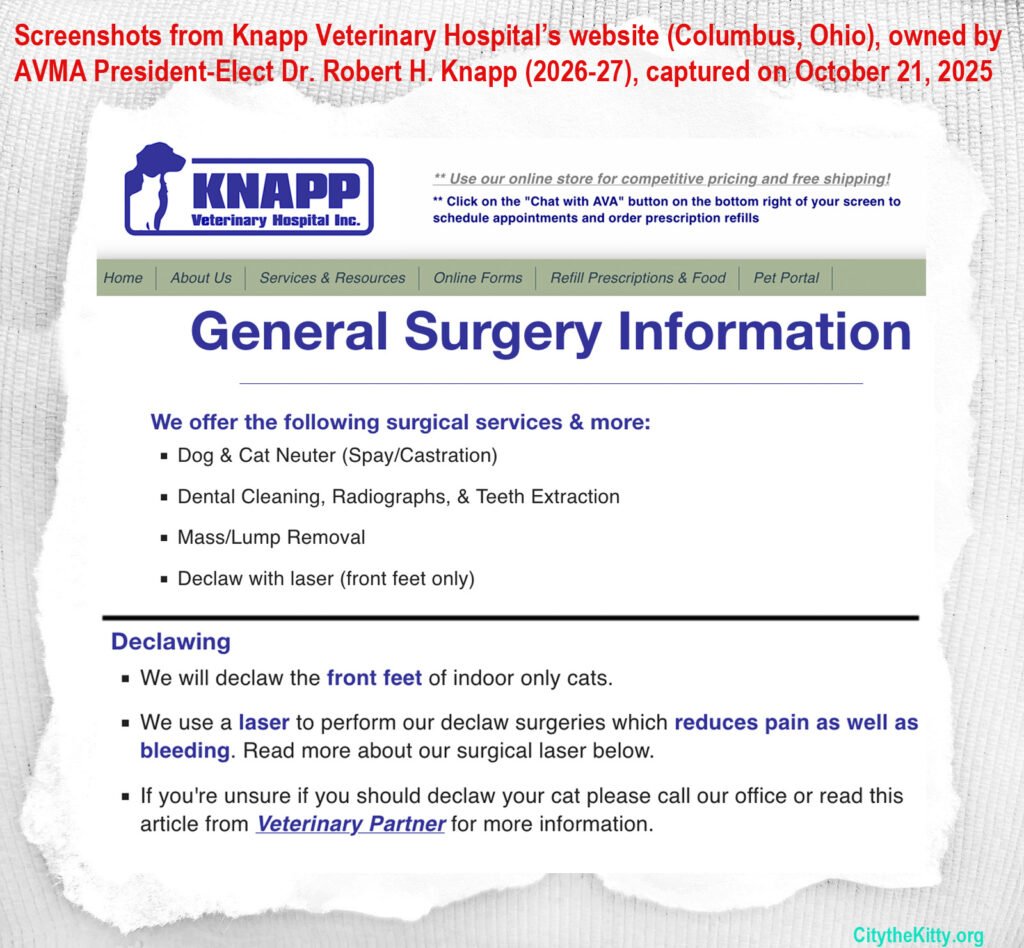
That was the response in September 2025 from an employee at Knapp Veterinary Hospital in Columbus, OH, the vet clinic owned by newly elected AVMA President-Elect Dr. Robert Knapp, when asked whether the clinic’s veterinarians perform cat declawing often.
One employee said all their veterinarians—including Dr. Robert Knapp—perform laser declaws, adding they are done “Monday through Friday.” Another employee said that all four of their doctors can do a declaw/spay and it just depends on what day of the week it is.
Despite Founder’s Focus on Vet Team Mental Health, Associated Veterinary Partners Allows Declawing, a Practice Harmful to Both Cats and Vet Staff
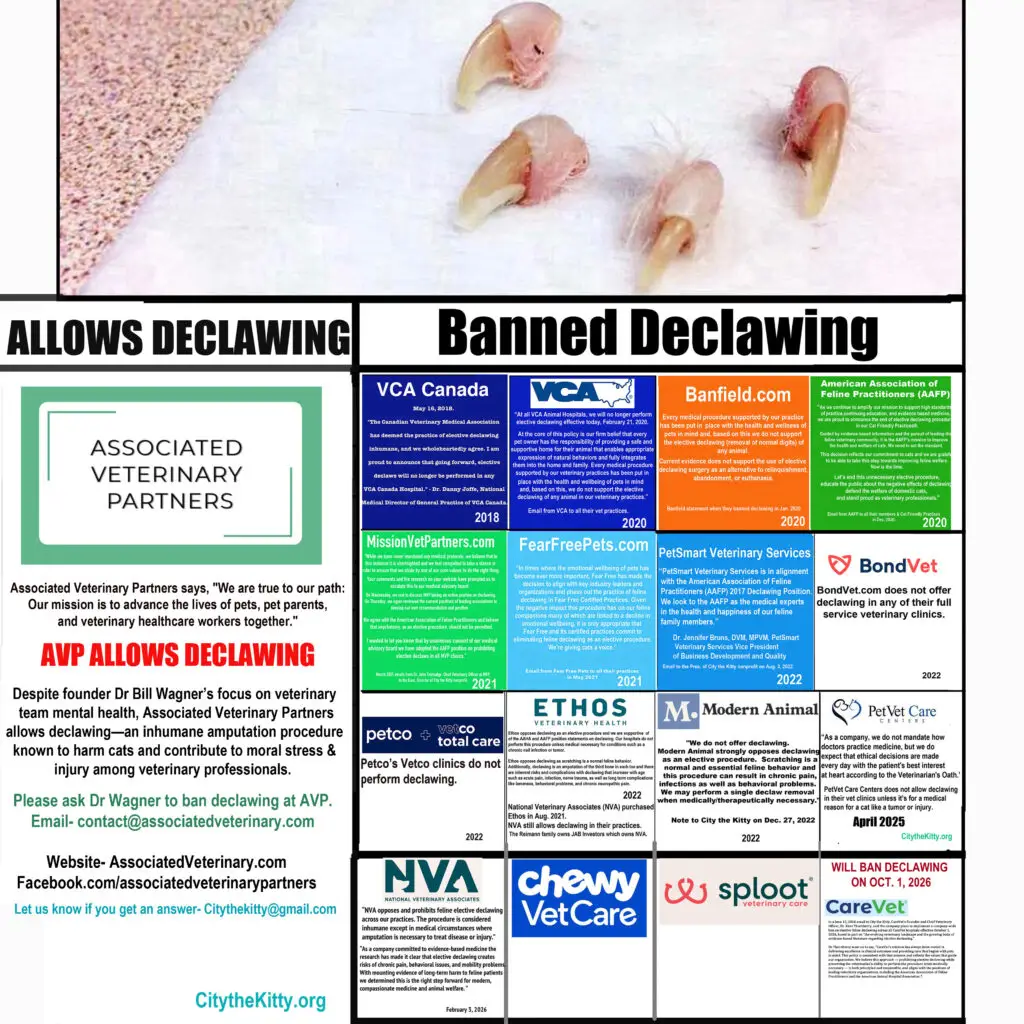
If declawing is contributing to moral stress for even some veterinary team members within Associated Veterinary Partners, as City the Kitty’s survey could suggest, it represents a preventable source of ethical conflict that could be eliminated with a single company-wide policy.
For a leader who has urged the veterinary profession to confront the systemic causes of moral injury, the question remains unanswered: Why does Co-founder and COO, Dr Bill Wagner, of Associated Veterinary Partners continue to allow an inhumane amputation procedure that may be creating the very ethical conflict and harm to veterinary professionals that he has spent years warning about?
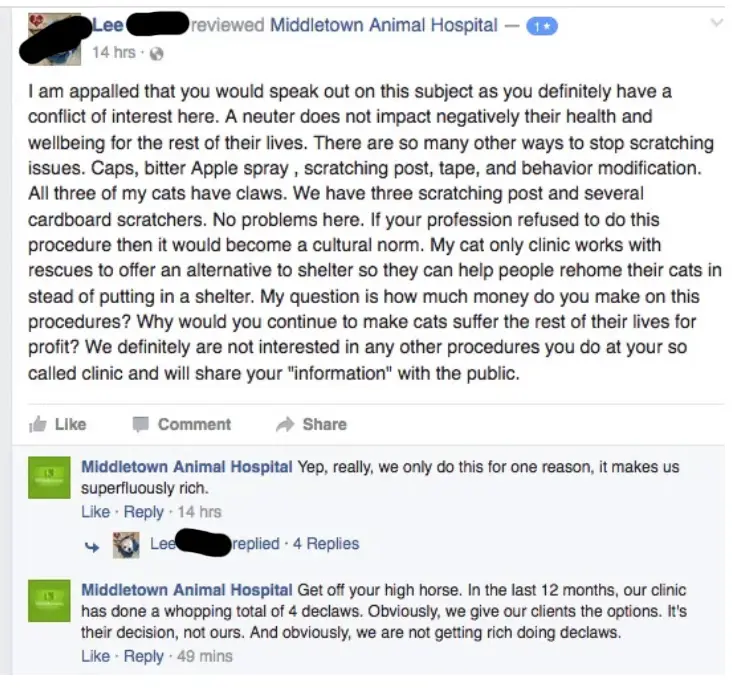
“The discomfort level is no more in a neuter than it is in a declaw that is done properly.”- NJVMA SpokesVet Dr Mike Yurkus
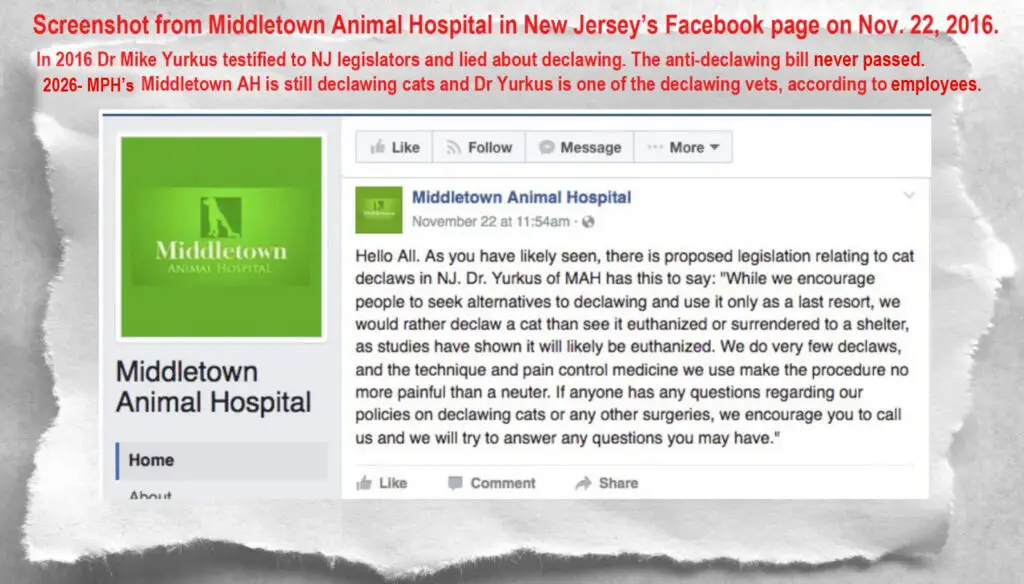
When cats start walking on their balls then we will start believing the NJVMA’s spokesvet Dr Yurkus and his animal hospital that declawing isn’t more painful than neutering.
Meanwhile, the American Association of Feline Practitioners’ policy on declawing states:
“Physically, regardless of the method used, onychectomy causes a higher level of pain than spays and neuters. Patients may experience both adaptive and maladaptive pain; in addition to inflammatory pain, there is the potential to develop long-term neuropathic or central pain if the pain is inadequately managed during the perioperative and healing periods.” [AAFP Policy Statement on Declawing, 2007.]
“Mission Pet Health’s highest priority is delivering the best possible health and wellness outcomes for animals” — Yet They Allow Declawing
If Mission Pet Health’s CVO, Dr. Dan Markwalder, banned declawing at MVP in 2021, why hasn’t he done the same at Mission Pet Health? Is MPH’s CEO Dr. Jay Price standing in the way, or was MVP’s ban simply a response to the bad publicity surrounding Elijah’s horrific laser declaw and not about protecting cats?
MVMA Used Misleading Testimony to Influence 7 GOP Legislators Who Stopped Minnesota’s Declawing Bill
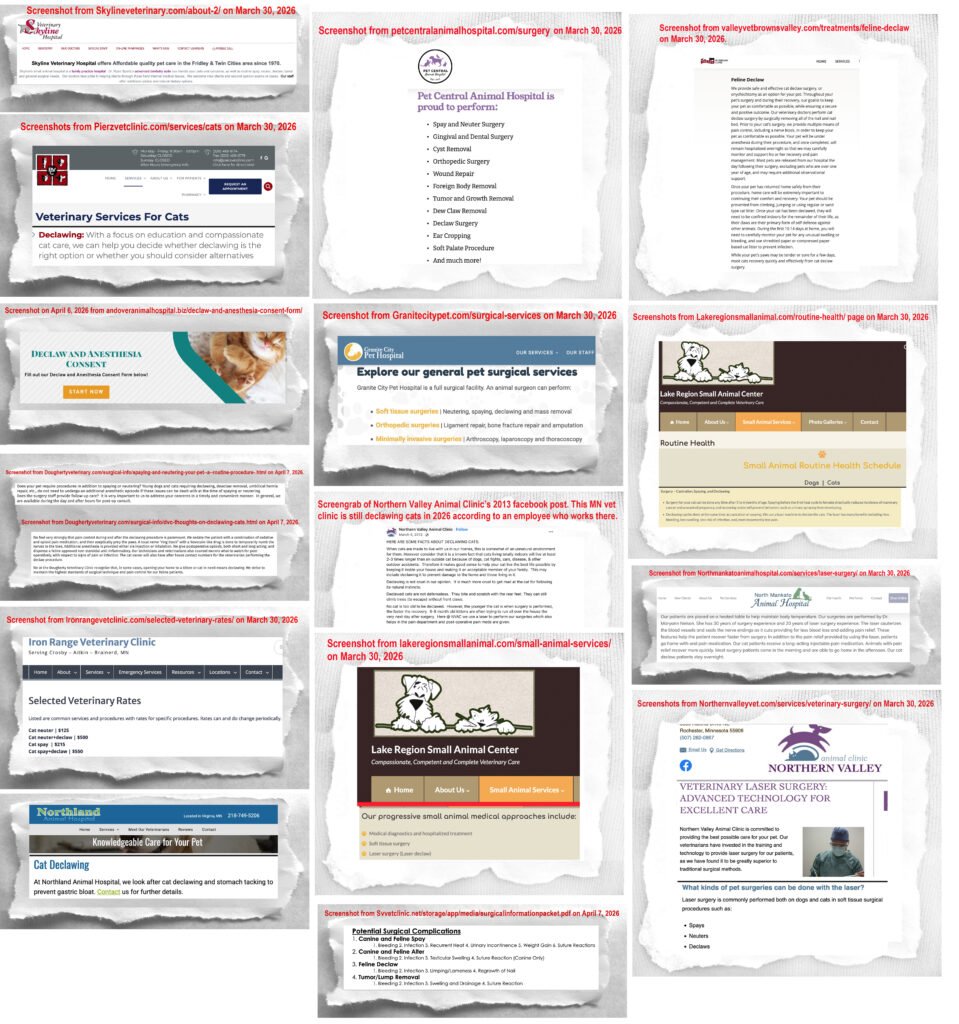
7 GOP Legislators are Duped by MVMA.org’s Declawing Deception And Kill The MN Anti-Declaw Bill, Ensuring Many Innocent and Healthy Cats in Minnesota Will Be Barbarically Mutilated and Suffer for Life. In 2025, MVMA spokesman Dr Trevor Ames assured lawmakers that “very few veterinary practices offer elective declawing as a service currently.” In 2026, MVMA’s spokesman, Dr Rob Memmem, co-owner of Gehrman Animal Hospital, reinforced that narrative in a March 2026 hearing, telling legislators there had been “a huge increase in the number of our veterinarians no longer performing the procedure over the last 15 or so years,” that “currently about 30%” still offer declawing while “70% are not,” and that the profession had “appropriately regulated itself moving away from this procedure.” He further claimed “a decreasing number of veterinary clinics are offering to perform this procedure entirely.” Our survey found that 61% of vet clinics in MN are still performing declawing.
How Dr Andy Roark Played The Victim Instead of Helping The Welfare of Cats.
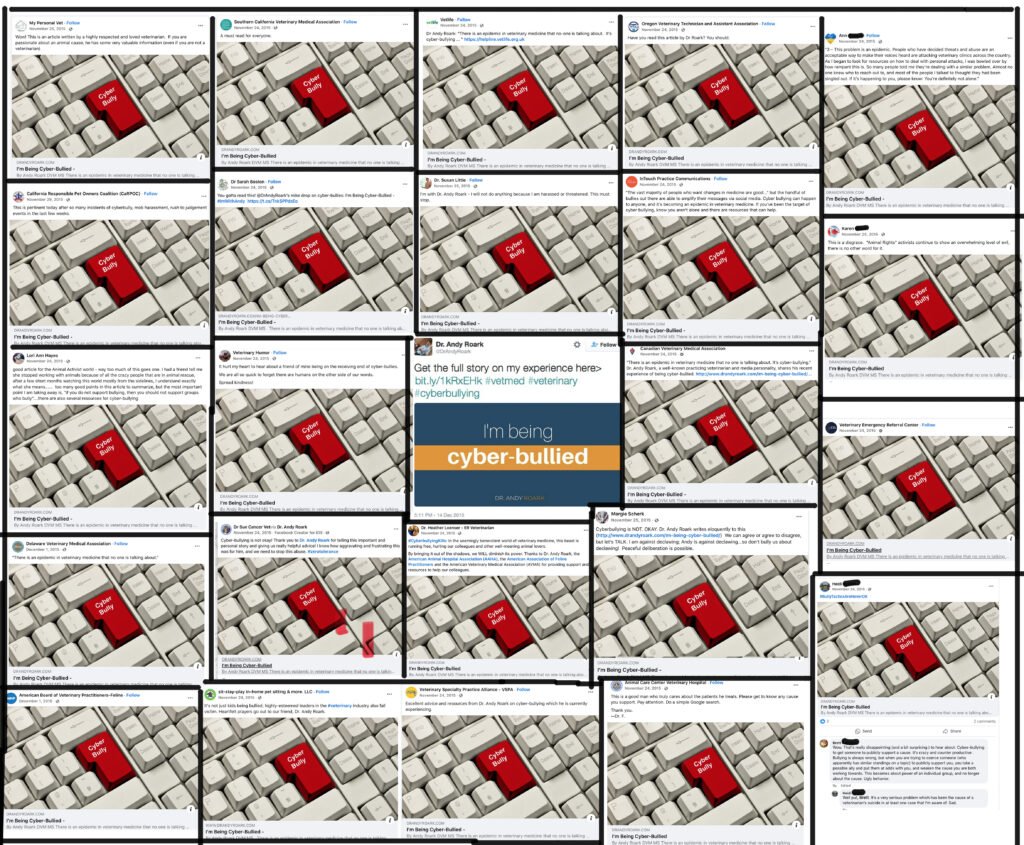
In one sentence he said he was, “impressed by my passion and dedication”, and that I’m someone who is working hard to help pets and do good in the world. He said that he hopes I see similar characteristics in him.
And in the next sentence he said he didn’t feel inspired but he felt attacked.
Hmmmm. How did I attack him?
I simply asked some questions in a private email as to why so many employees at his practice that is a AAHA, AAFP Cat Friendly hospital were saying that they are a high volume declawing practice and that cat owners could book a declaw surgery with him personally.
It’s 2025. Declawing Is A Common Procedure In Northeast Texas. Cats Don’t Stand A Chance.
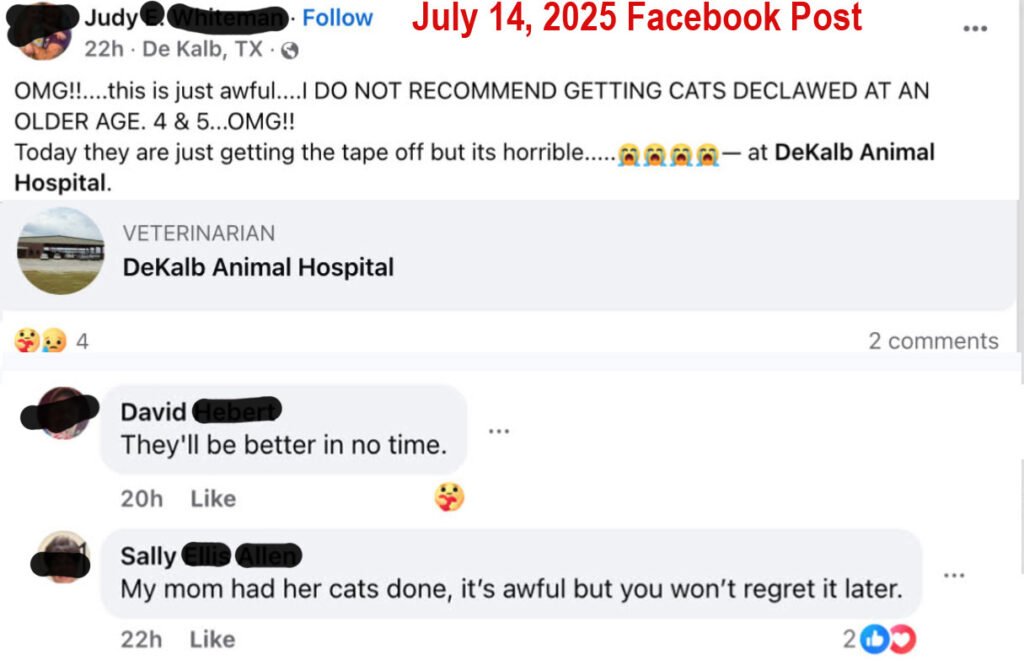
Declawing is a regular procedure in most vet clinics in Northeast Texas. If you can find a no-declaw clinic in that area, please send us a note. Citythekitty@gmail.com
AVMA’s Credibility in Crisis: Leaders With Financial Ties to Declawing Shape Policy, Prompting Calls to Rename It the “American Veterinary Money Association”
Story published on October 21, 2025. Here’s our petition to the AVMA. AVMA Petition Update July 2026. Nearly 75 Years After The AVMA Helped Popularize Declawing, Two Vets Connected to Declawing Clinics Rise to AVMA’s Top Leadership. Here’s our story- https://citythekitty.org/yes-they-do-them-all-the-time-the-avma-elects-two-declawing-veterinarians-to-top-leadership-roles/ Update January 2026. In a sharp January 2026 Letter to the Editor in the […]
AAHA Is Slowly Coming Around: No-Declaw Hospital Wins Top Honor. Now It’s Time to Ban Declawing in 2025!
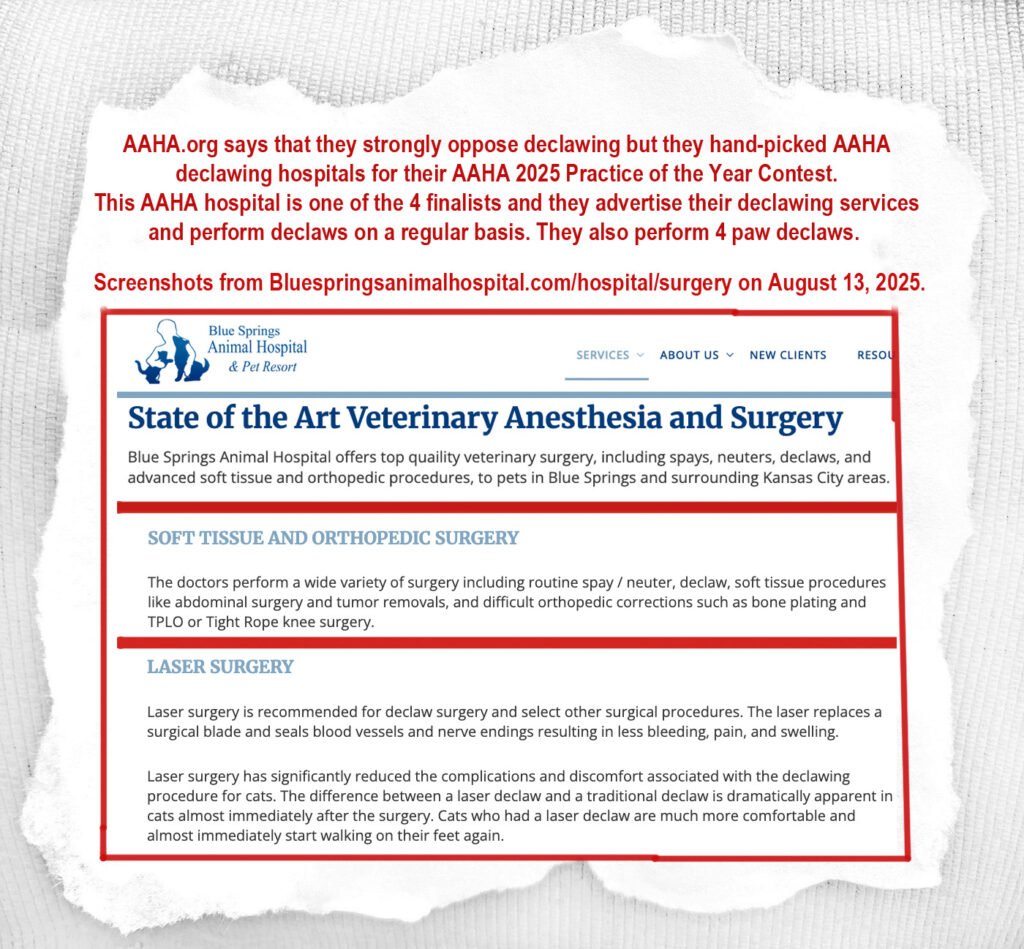
On August 12, 2025, AAHA announced their 4 finalists for AAHA’s 2025 Practice of the Year.
3 of them declaw cats. One of them even advertises their laser declawing on their website and minimizes the long term suffering and risks to the cat’s health and well being. https://www.bluespringsanimalhospital.com/hospital/surgery
A Declawing Horror Story at a Standard of Excellence AAHA Accredited Animal Hospital.
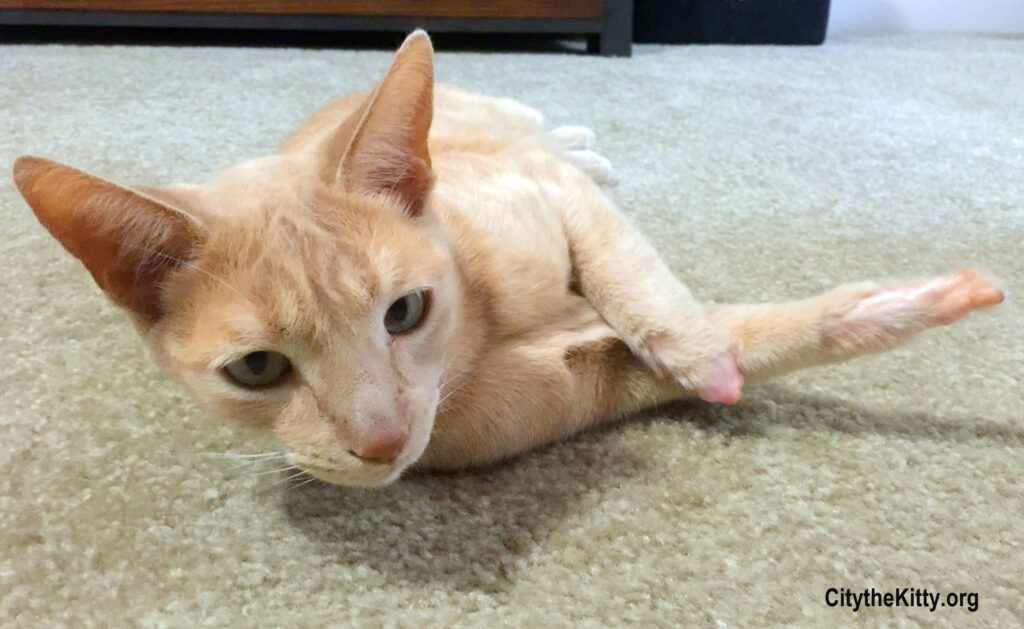
This is a horrific story about 3 kitties named Teeger, Abby, and Ryder, whose lives have been tragically ruined because of being declawed.