Veterinary United says, “We are healers first and foremost” yet most of their clinics declaw cats.
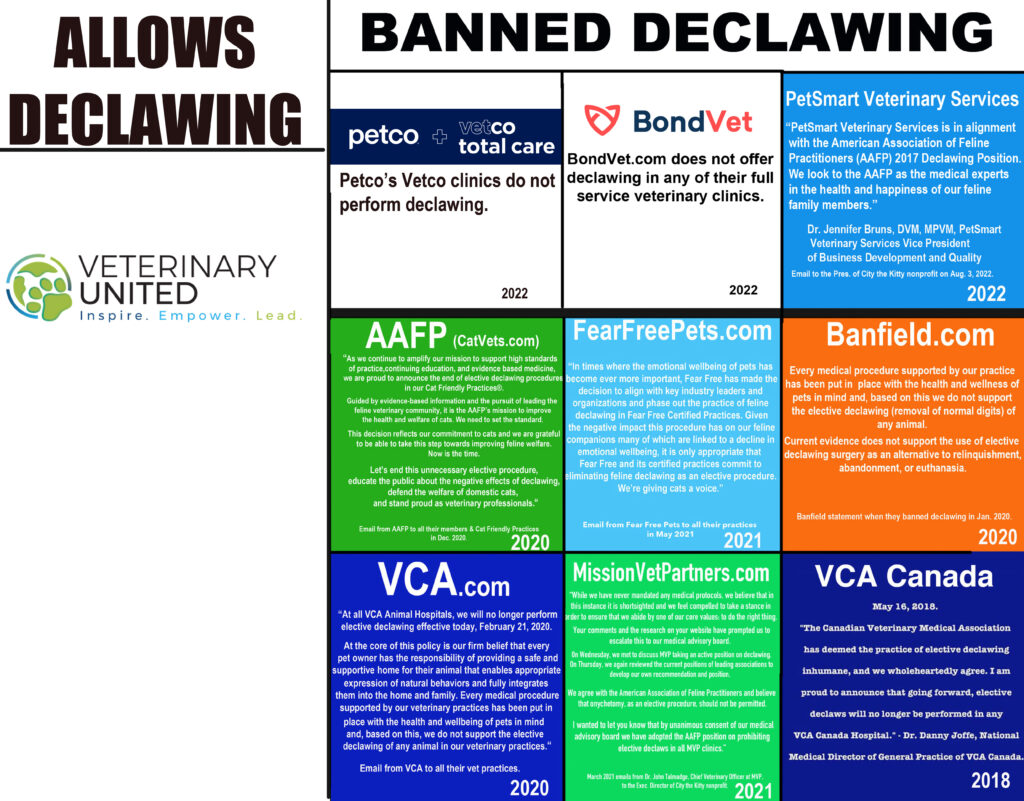
Story published on November 7, 2022 and updated in 2025 and 2026. Veterinary United says, “We are healers first and foremost” on their website. https://veterinaryunited.com/ Here are a few more things that Veterinary United says on their website. “At Vet United, we’re more than a group of practices—we’re a family, and our values are the […]
Fear Free Pets Banned Declawing in All Their Practices. 2022
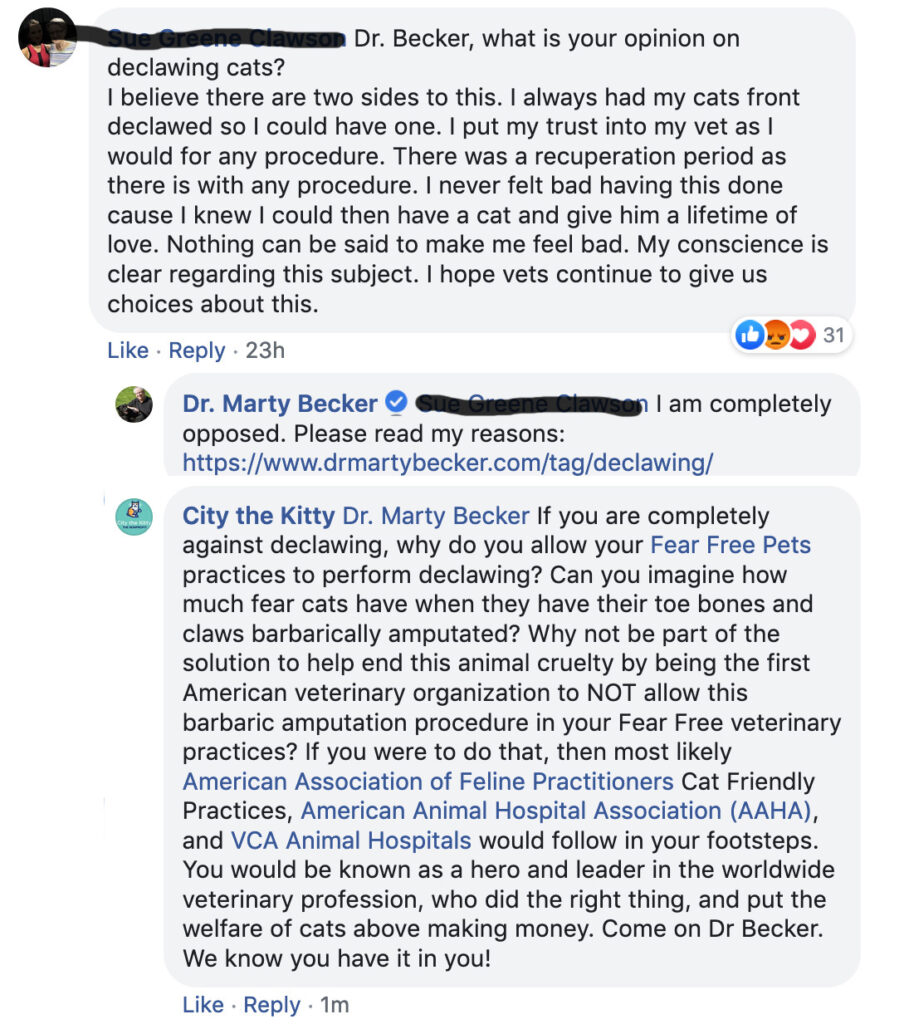
Story published on Jan. 23, 2021 UPDATE JAN. 2022- FEAR FREE PETS BANNED DECLAWING IN ALL THEIR PRACTICES. Fear Free Pets (Founder/Owner Dr Marty Becker) – They say they are an education company and provide a course for their members about why they should not declaw as well as alternatives to declawing. In MAY of […]
Declawing Innocent & Healthy Cats is a BIG Money-Making Business in Ohio.
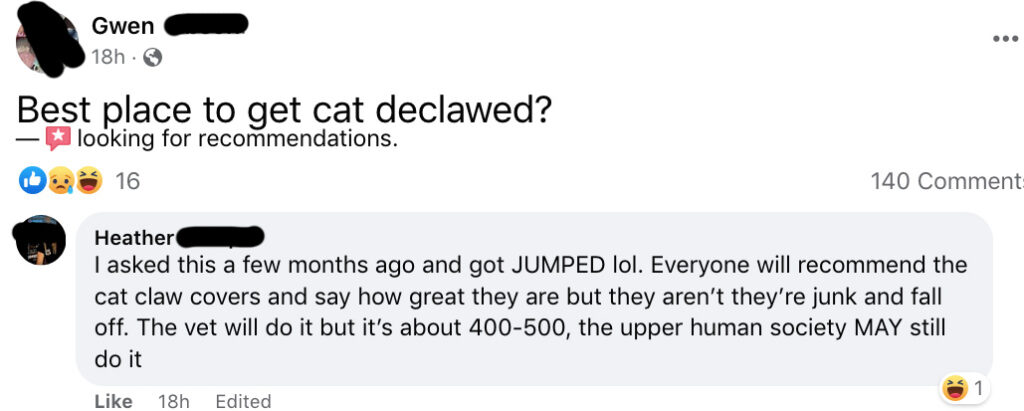
Declawing is a big money making procedure in Ohio.
Why is Kelley’s Heart to Heart Adoption Center in MI Declawing Most of Their Rescued Cats Before They Put them Up For Adoption?
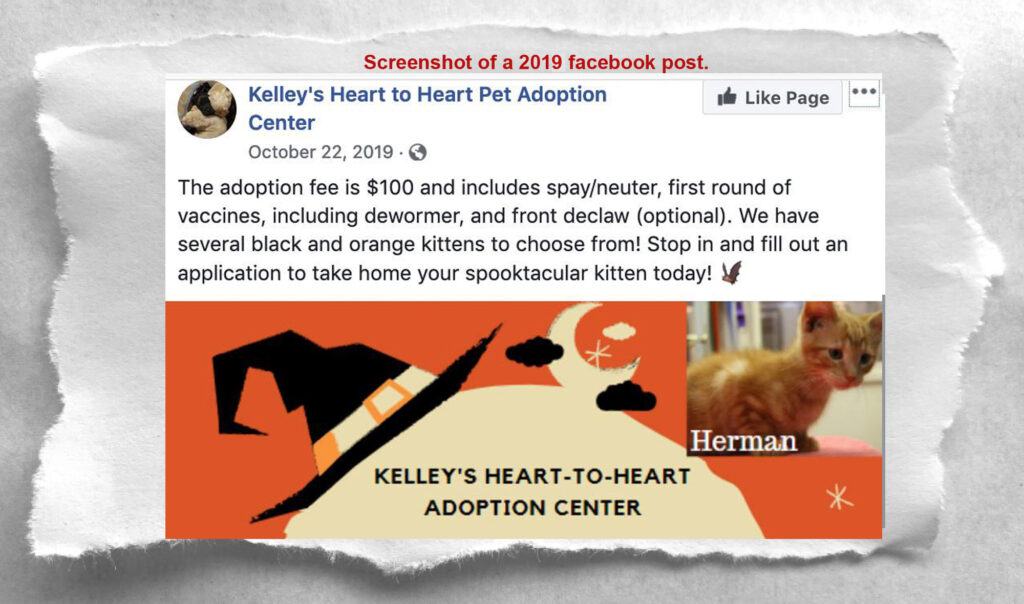
Dr James Kelley, the owner and declawing vet from Kelley’s Animal Clinic in Walker, MI sent a note to all the shelter directors in Michigan in Feb. 2020 about how he opposed the anti-declawing bill. Some of the things he said in the note were, “Declawing your cat is not a cruel choice, there are no ill side effects, and the cats are not aware of the fact that they have been declawed.”
Dr James Kelley also runs a cat adoption organization called Kelley’s Heart to Heart Adoption Center in Walker, MI and most of their rescued kittens are declawed before they put them up for adoption.
Why Did Cats Only Veterinary Clinic in Searcy, Arkansas Put Up This Declawing Billboard?
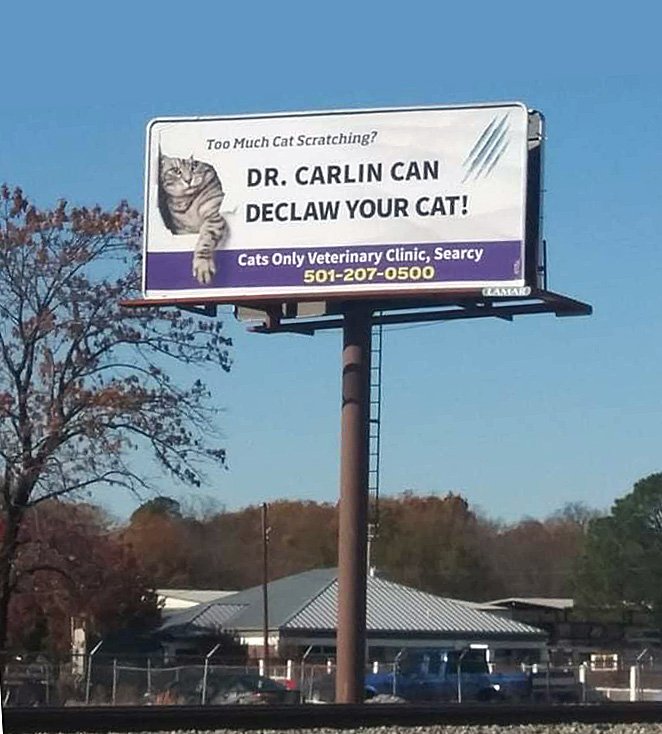
Story published Dec. 1, 2021 Cats Only Veterinary Clinic put up this billboard in November 2021, on Harkrider St. at Bruce St. in Conway, AR which is around 50 miles from his clinic. Here’s more about Cats Only Veterinary Clinic and declawing clinics in Searcy. Cats Only Veterinary Clinic and Declawing in Searcy, AR According […]
Why Was AAHA Accredited Wexford Veterinary Hospital in PA Deceiving Pet Parents?
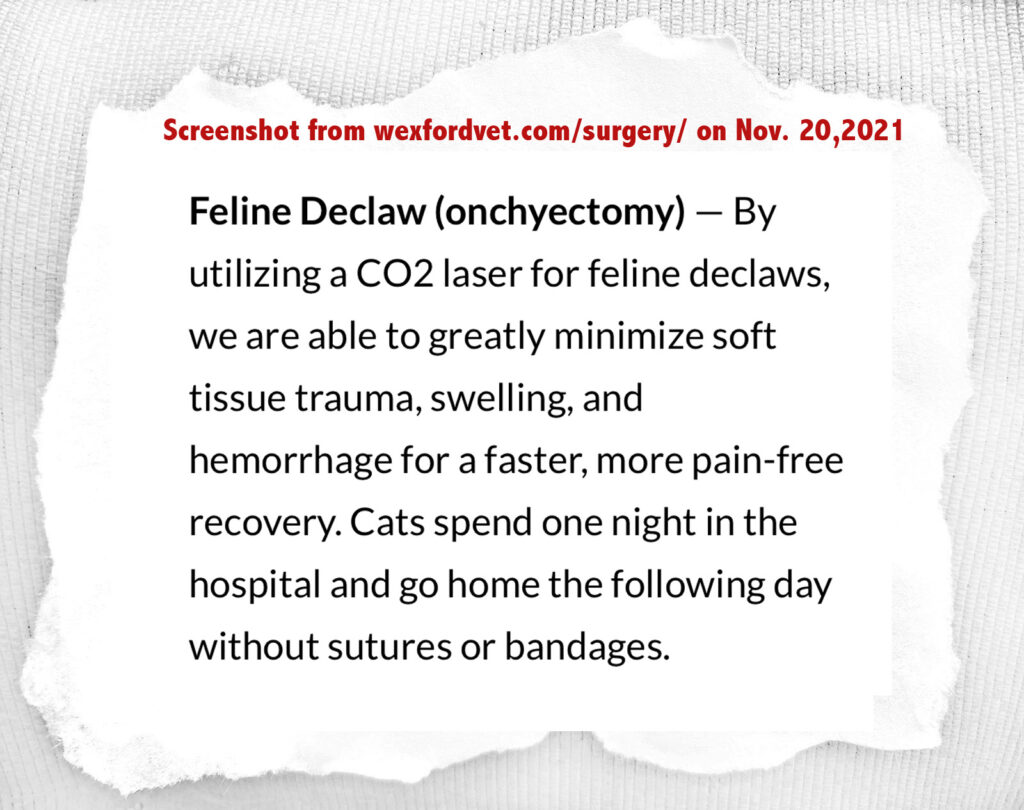
If an animal hospital lies right up front to clients then how can anyone trust everything else they are doing? What keeps them from lying to you in person about your beloved pet? Why is this AAHA hospital promoting things on the front of their website that just aren’t true? AAHA has 900 standards of care for their accredited animal hospitals and AAHA allows declawing in their hospitals. Does AAHA also allow lies and deception?
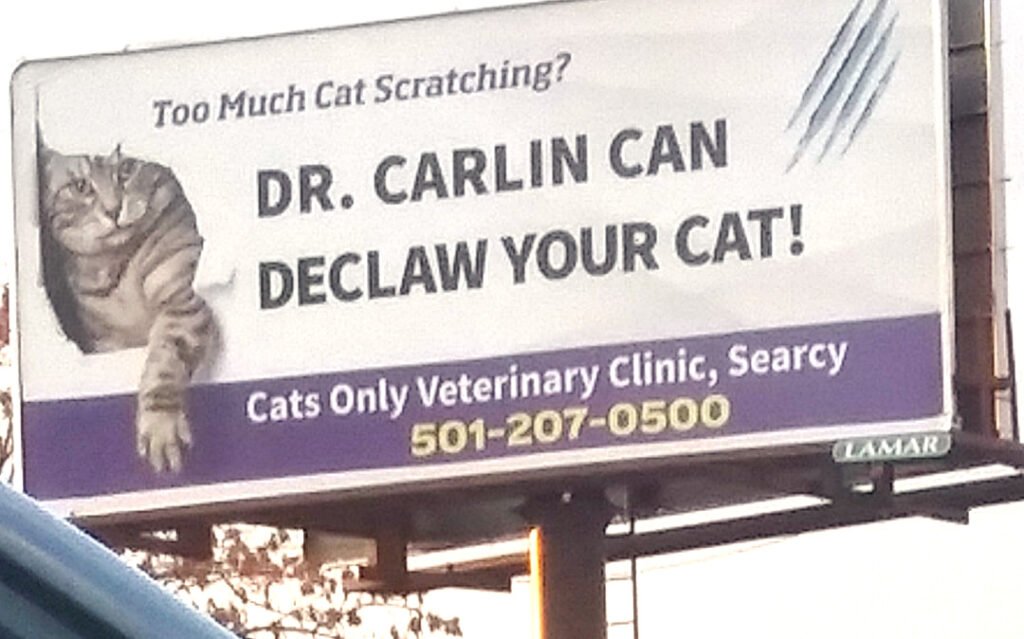
Cat Owners Beware! Declawing Vets In Arkansas Make Good Money From This Animal Cruelty. Don’t Let Your Cats Be Their Next Victim.
r 2021
This veterinarian, Dr Stan Carlin, is declawing cats by chopping part their their last toe bone off. He is declawing cats using the old school, guillotine clipper method as he explains here on his website. He says that this method is the right way to declaw a cat. He says that it is a humane option and says, “Declaw Gently” on his website.
Did AAHA Accredited Androscoggin Animal Hospital in Maine Stop Being A Cat Friendly Practice So They Could Keep Declawing Cats?
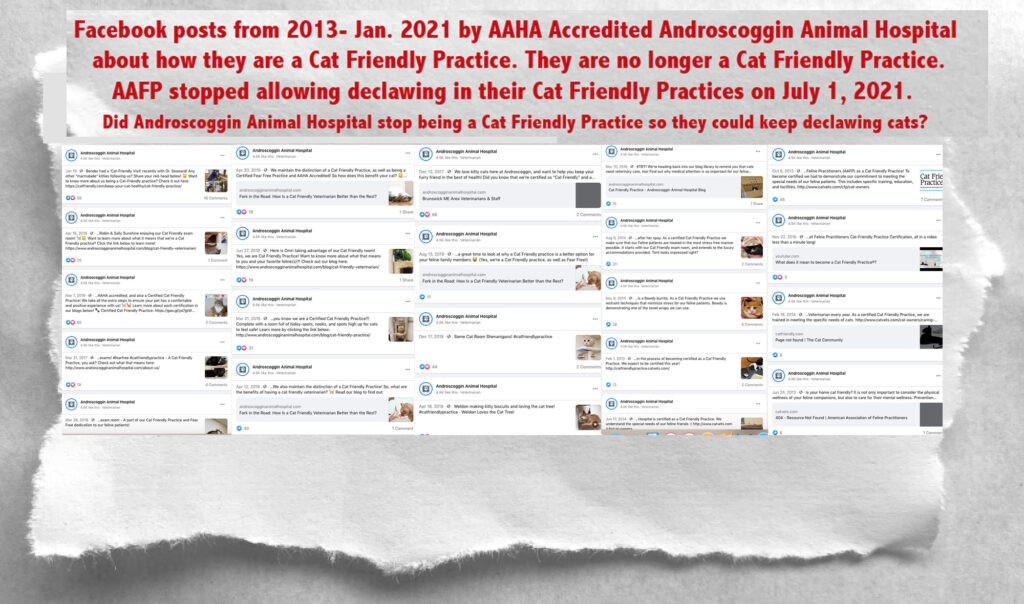
On July 1, 2021, The American Assoc. of Feline Practitioners (AAFP) stopped allowing declawing in all their Cat Friendly Practices.
Many Cat Friendly Practices are also AAHA Accredited Animal Hospitals and we are finding some who stopped being a CAT FRIENDLY Practice because they wanted to be able to keep declawing cats.
Did Androscoggin Animal Hospital stop being a Cat Friendly Practice in 2021 so they could keep declawing cats?
Why is the Animal Humane Society’s Declawing Position Statement On The Side of Declawing Veterinarians?
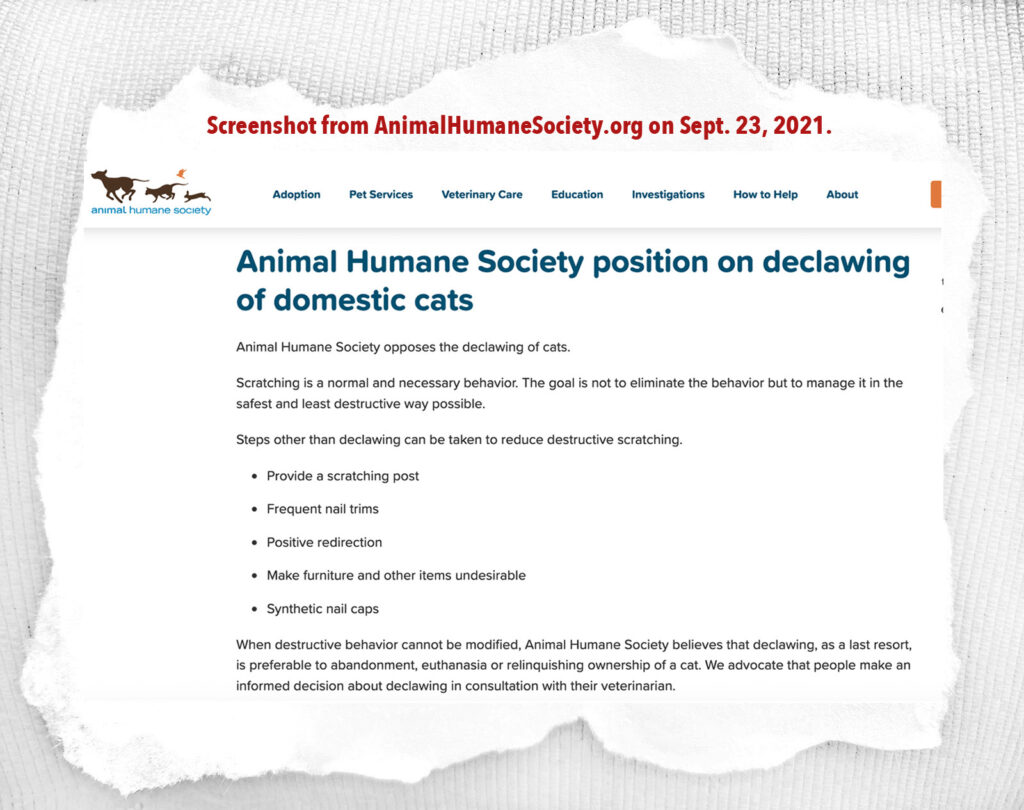
UPDATE 2025. Animal Humane Society updated their declawing position statement (March 2023) and took out the sentence, “When destructive behavior cannot be modified, Animal Humane Society believes that declawing, as a last resort, is preferable to abandonment, euthanasia or relinquishing ownership of a cat. We advocate that people make an informed decision about declawing in […]
Does The Animal Humane Society Like Dogs More Than Cats?
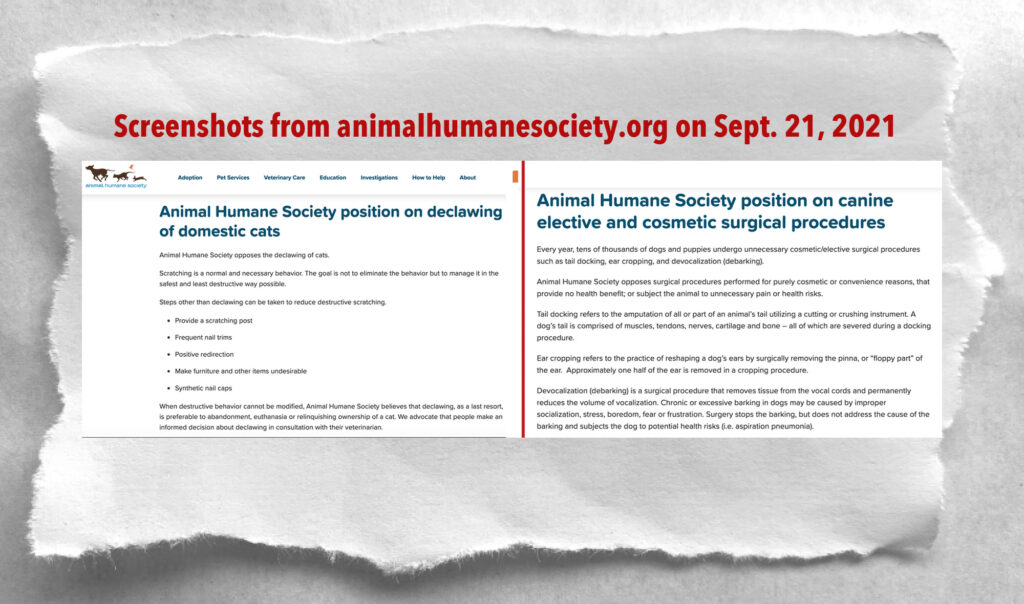
UPDATE- Oct. 2021. The Animal Humane Society updated their declawing position statement to completely condemn it. Story published on Sept. 21, 2021. The Animal Humane Society says they are one of the nation’s leading animal welfare organizations. The AHS says they had 23 million page views on their website last year. Wow! Animal Humane Society’s […]